Positive feedback is essential to achieving success on Amazon. Enough of it helps with your product visibility, attracting prospective customers because they can confidently buy it. However, having more negative reviews than positive ones affects your seller rating, revenue, and business.
As a seller, you must stay proactive in managing critical reviews to protect your reputation in the marketplace.
This blog post will guide you in dealing with criticisms your customers left on your listings. To describe, these are negative reviews expressing honest opinion about your product with no clear violation of Amazon’s community guidelines. Essentially, these are reviews that Amazon will not remove because they are helpful guides to prospective buyers.
We will also explore how safely you can use the review removal request templates prescribed here with your customers. Along with that is touching on some of Amazon’s review removal policies that you should know to avoid legal pitfalls when requesting review removals.
Understanding Amazon Review Removal Policies
Before taking any step further in dealing with a negative review, you must first acquaint yourself with particular Amazon rules. It is to ensure you’re not violating their guidelines when trying to have a negative review removed.
Here’s a short list of those Amazon policies and what you need to know about them.
Community Guidelines
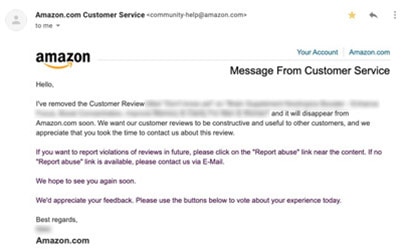
The Amazon Community Guidelines detail what product reviews Amazon considers acceptable on the platform. While it addresses buyers, you can make it a reference to determine if the review you received is non-compliant. If it is, report it to Amazon and request its removal, saving you time to contact customers directly.
Anti-Manipulation Policy
Amazon is stringent about review manipulation on the platform and will take legal action against you or a buyer if proven to violate their anti-manipulation policy for customer reviews.
For sellers, it means you can’t use manipulation tactics on your customers to alter or delete their negative reviews, such as giving incentives or returning their money. For buyers, it means they can’t engage in fake reviews brokering or accept bribes from sellers to edit their reviews.
Customer Product Reviews Policies
This seller-facing policy breaks down and details in a list what Amazon prohibits you to do when it comes to product reviews. The prohibitions, if you will notice, are all interconnected with their other guidelines on the platform, reiterating their zero tolerance for violators and the possible civil or criminal charges you could face.
Communication Guidelines
As a seller, you occasionally need to directly communicate with your customers to sort out some issues about their orders or request a review. So, you must have a thorough understanding of Amazon’s communication guidelines. Being unaware of it may cause you to use particularly prohibited language that indirectly imposes your customer to write you a positive review or delete a negative review. Essentially, the idea of the guideline is for sellers to have no room for review manipulation.
Key Takeaway: Know the rules before you act! Familiarize yourself with Amazon’s Community Guidelines, Anti-Manipulation Policy, and Communication Guidelines to identify violations in negative reviews. Reporting non-compliant reviews to Amazon saves you time and avoids violating their strict policies on review manipulation.
Review Removal Request
Because of the stringent Amazon policies and the potential consequences for violating them, you have to tread lightly (and safely) when requesting a review removal from your customers.
Since your customers authored their reviews (assuming the reviews are fully compliant), they are the ones who can edit or remove them within a period. However, as Amazon policies indicate, you cannot request a customer to remove a review even after resolving a purchase issue. So, while you’re allowed to directly communicate with customers, asking them to remove a review should not be your agenda, lest you risk being reported to Amazon.
Still, while you can’t say it directly, positive action and communication to customers displaying your sincere commitment to excellent customer service can sway their decision to reverse their negative reviews.
Essentially, be proactive in responding to a negative review and tackling product issues with customers by:
- apologizing for any inconvenience caused
- offering to resolve the situation to their satisfaction
- committing to do better
Here’s a template email that contains the factors described above. You can use it to initiate a resolution with them. Don’t forget to include other mandatory data as prescribed in the communication guidelines, such as the order number, for reference.
Dear [customer name],
We are deeply sorry to know that you have been dissatisfied with our product and for any inconvenience it may have caused. We sincerely appreciate and consider your feedback as valuable information that we can use to improve and provide our customers with the best customer experience possible.
As a gesture of our apology, we offer to remedy the situation to your utmost satisfaction or refund your payment if that would be your choice.
We look forward to hearing from you again.
Sincerely,
Service Team
If you do your best to resolve the matter and delight your customers, you can safely assume they will return the favor by editing or deleting their review. Because for a satisfied customer, that’s the most natural thing to do. So, sending them an email to “wrap up” your mutually-agreed resolution gently nudges them to give in to your unspoken request.
Here’s a post-resolution email template that you can use to touch base with your customer.
Dear [customer name],
We hope that we have sufficiently addressed your concerns about your recent order with the following details:
Order No:
Product:
Description:
Resolution:
Thank you for allowing us to remedy the situation. Rest assured, we value your feedback to improve our offerings and provide you a better service.
We look forward to your next purchase with us.
Thank you for your business!
Sincerely,
Service Team
Key Takeaway: Tread carefully! Amazon restricts review removal requests. Focus on resolving customer issues and exceeding expectations. Genuine apologies, solutions, and follow-up communication can nudge customers to edit or remove negative reviews themselves.
Avoiding Negative Feedback
To rid you of the trouble of constantly dealing with a negative review and requesting its removal, you should go back to the basics:
Sell High-Quality Products
When you sell rave-worthy products, you won’t worry about requesting a review or receiving a negative review, as customers themselves will be willing to put out a good word for it. According to a study, 56% of customers will write you a positive review if your product is excellent.
Negative product reviews are the results of failed expectations, so to avoid that, be truthful in how you present your products on your listings:
- Write a clear product description.
- Use high-quality images showing the product from all angles.
- Explain proper usage.
- Include disclaimers as necessary.
Provide The Best Customer Service
What goes well with high-quality products is excellent customer service. Either shouldn’t be standalone when you’re aiming for a sustainable and successful Amazon business. When you keep your service customer-centric, not only will customers love you, but Amazon as well.
The best customer service need not be complicated; all you need to do is stay true to what makes customers happy:
- Being quick to respond to their inquiries
- Providing quality checks on their orders before shipping
- Securing their orders to ensure they receive them without damage
- Delivering their orders on time
FAQs: Amazon Feedback Removal Request Template
How Do I Ask a Customer To Remove Feedback On Amazon?
Amazon prohibits you from deliberately asking a customer to remove their feedback, even in cases where you have successfully resolved a product issue. You are instead encouraged to provide the best customer service experience in hopes that your customers will reverse their feedback or edit them in your favor.
How Do I Remove Negative Feedback From Amazon?
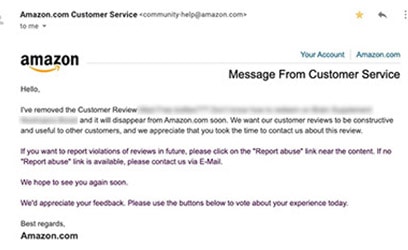
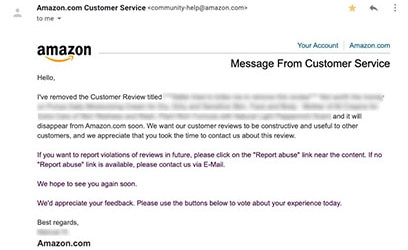
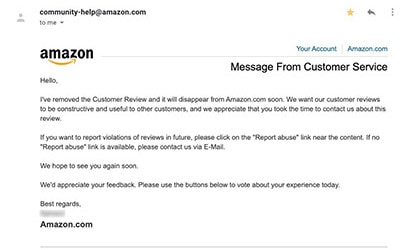
As a seller, you don’t have the direct capacity to remove negative feedback from your listings other than to report them to Amazon for removal. But keep in mind that Amazon will only remove a negative review if it violates its community guidelines. If the review is an honest criticism, it is best to resolve it directly with your customer, following the guidelines above.
You may also partner with professional negative review removal services, taking the burden of this task off your shoulders so you can focus on improving your business.
In Summary
You can leverage your seller privilege of connecting with customers directly to resolve a product issue for a chance of having their negative reviews removed. Keep in mind that you have rules to follow when communicating with customers; utilizing the templates provided here should safely guide you and ensure success in your actions. Likewise, in maintaining a sustainable and successful Amazon business, you can never go wrong in committing to selling high-quality products and providing the best customer experience.
Looking for experts to manage the most complex aspects of selling on Amazon?
to protect, defend & grow your brand on the Amazon marketplace.